Ceiling Drywall Demo and Prep After Water Damage
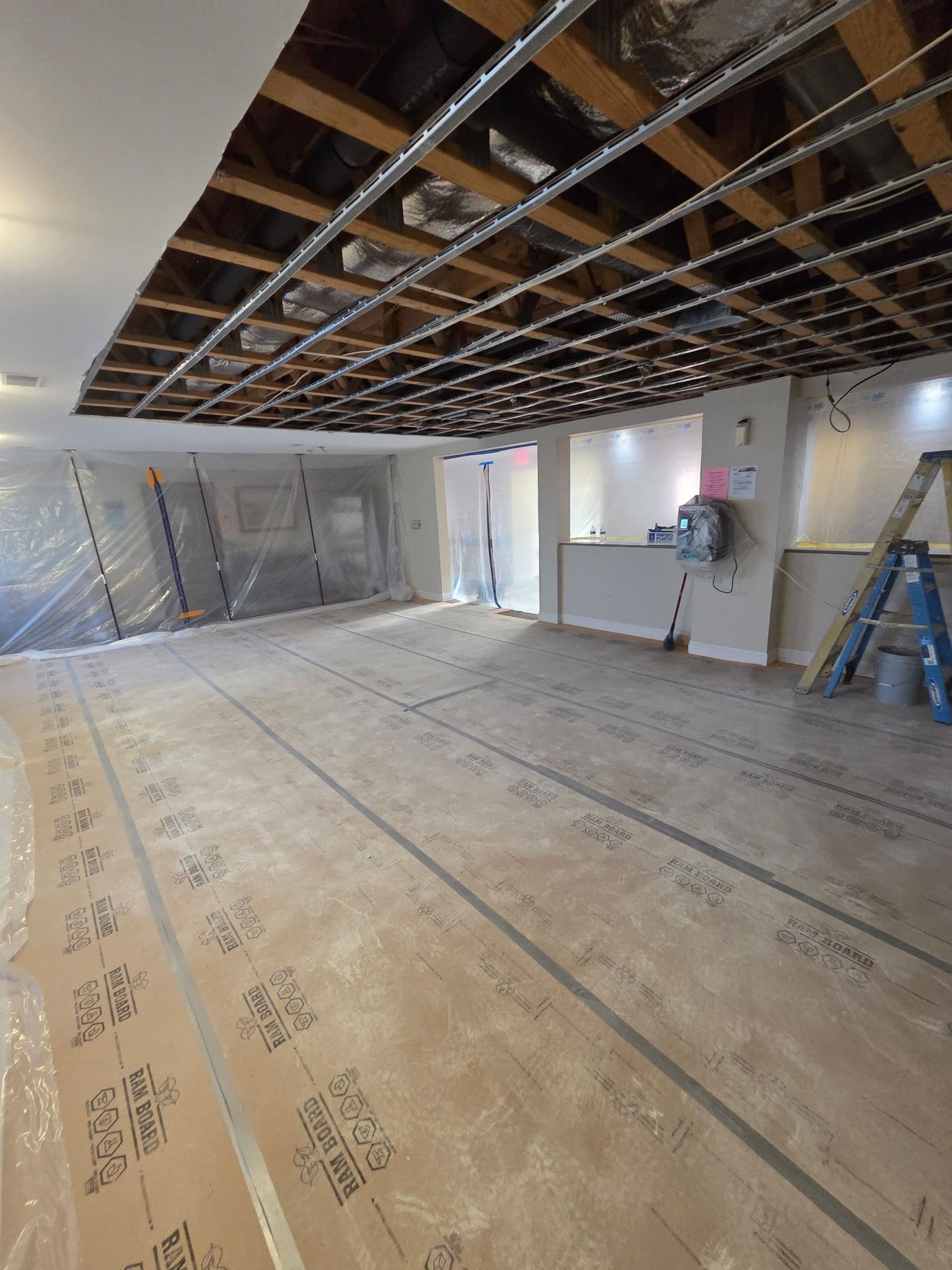
Water damage has a way of making everything feel urgent. The ceiling is wrecked, the space is a mess, and the pressure to just get it fixed fast is real. But rushing the prep is exactly how you end up with problems down the road - uneven drywall, dust everywhere, and floors or furniture that got caught in the crossfire.
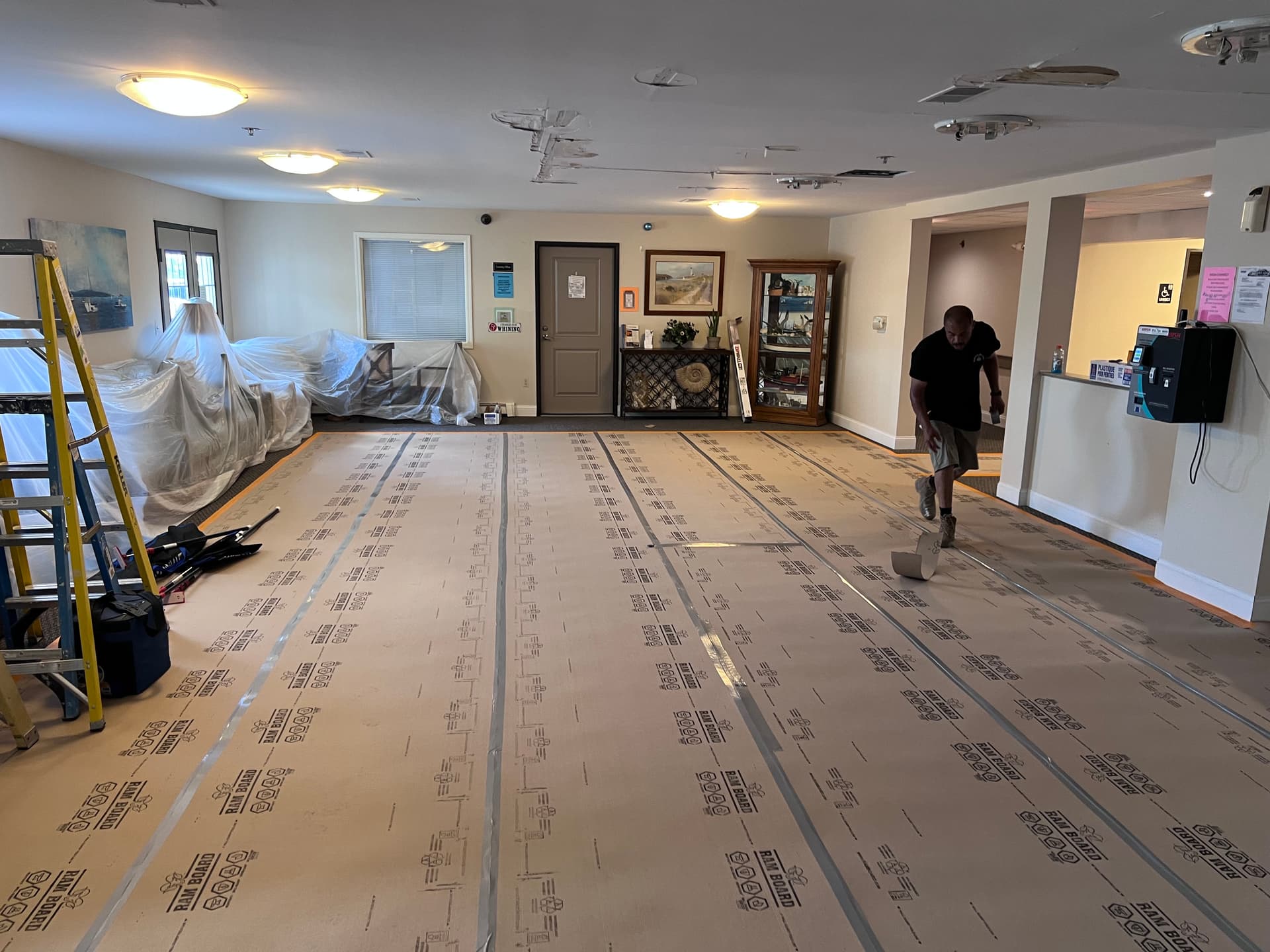
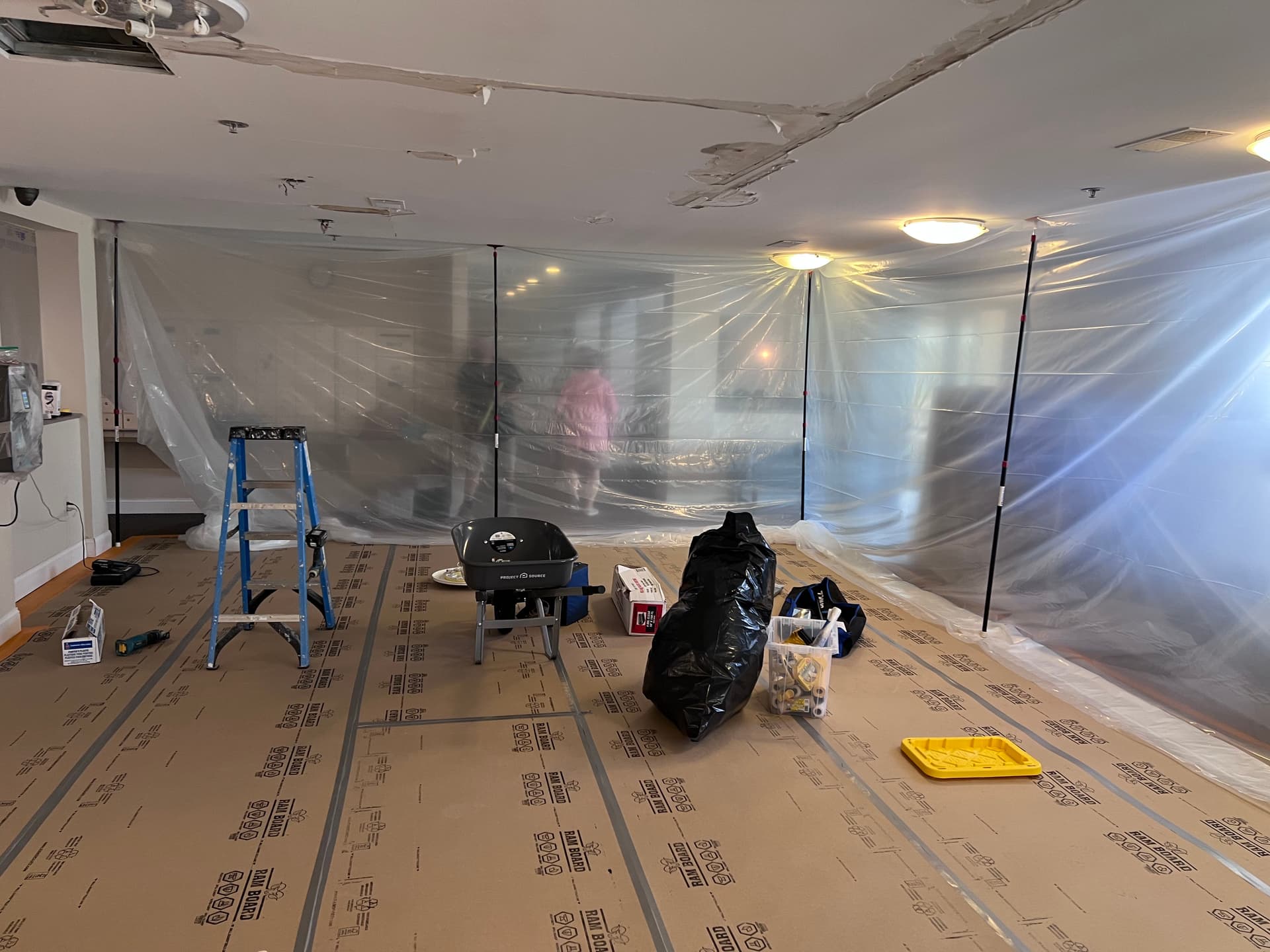
That's why before a single piece of drywall comes down, we set up the space the right way. Ram Board floor protection goes down wall to wall. Plastic sheeting gets hung on tension poles to create a full dust containment barrier around the work zone. Furniture and fixtures get wrapped tight. The goal is to keep the damage isolated - not let the repair create a second wave of it.
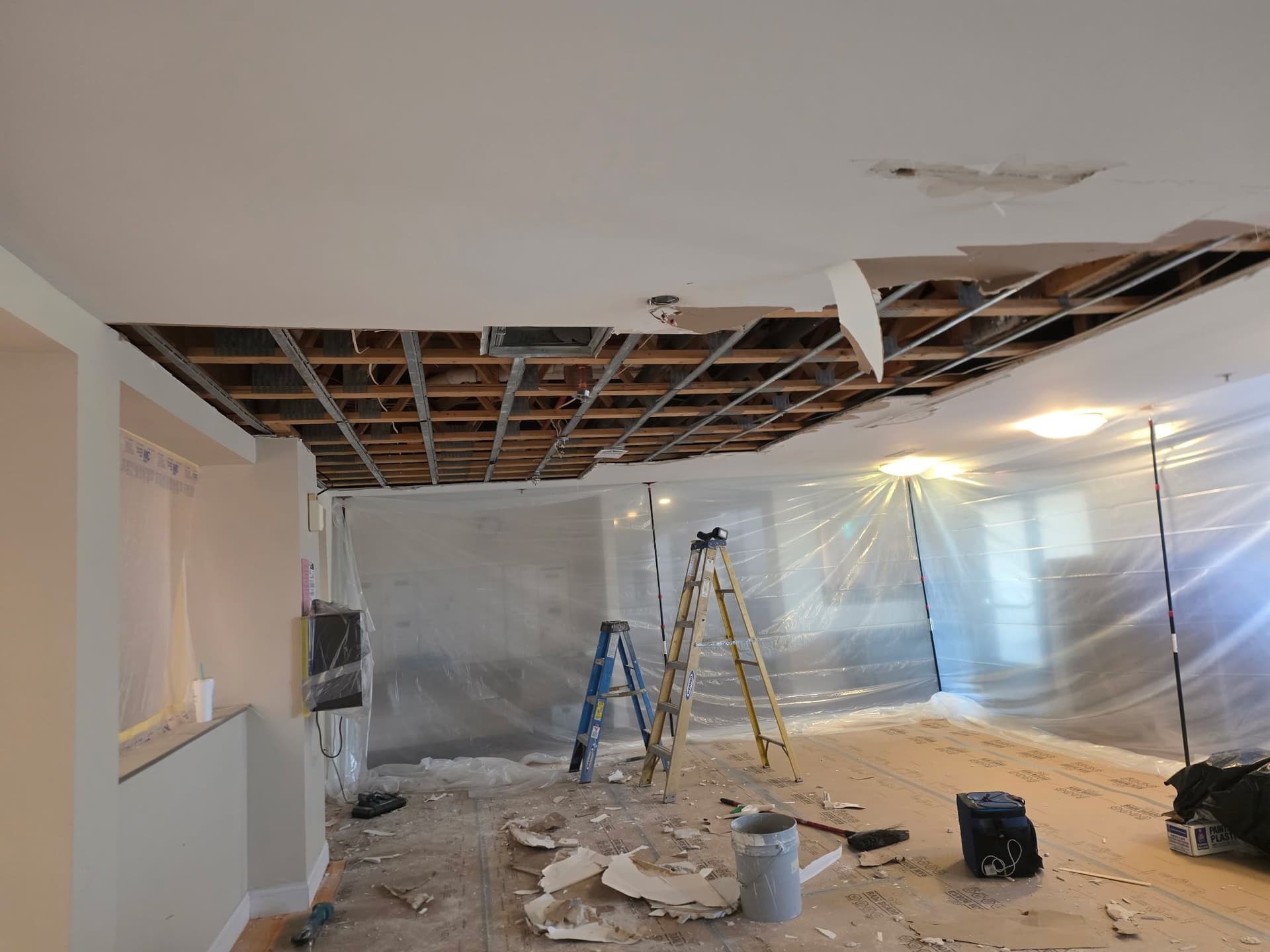
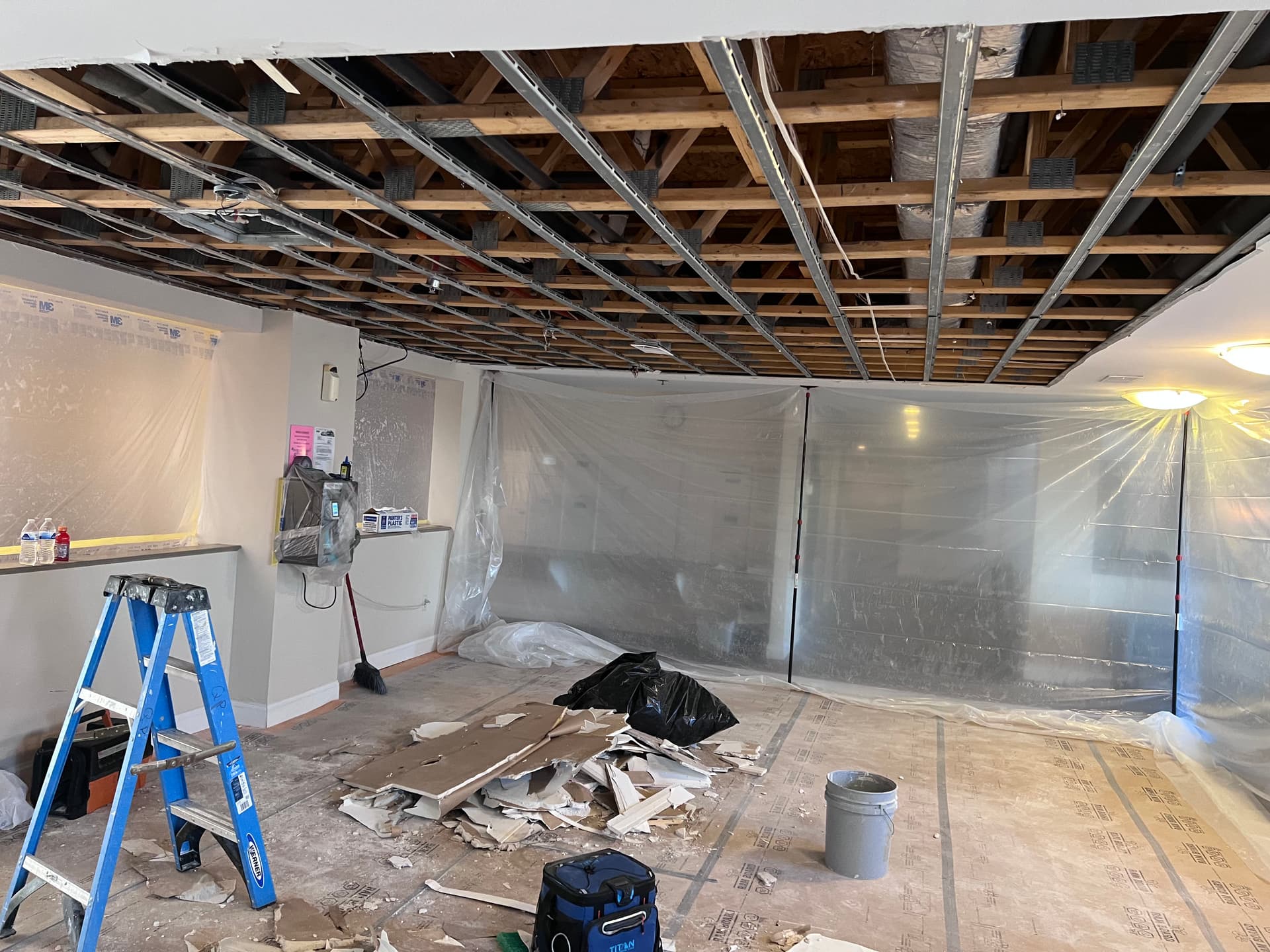
Once the site is protected, we get into the demo. Here, we stripped out the water-damaged ceiling drywall to expose the full framing and metal grid underneath. Doing it this way lets us assess the actual scope of the damage - what's salvageable, what needs to go, and whether there's anything structural or mechanical that needs attention before new drywall goes in.
Clean demo is the foundation of a clean repair. If the surface isn't properly cleared and the framing isn't solid, the new drywall is just covering up a future problem. We take that part seriously, which is why we don't skip steps even when the job looks straightforward on the surface.
Water damage repairs like this one are exactly what our drywall repair work is built around. It's not just about patching a hole - it's about getting the whole space back to where it should be, without leaving a mess behind or cutting corners on the prep.