Worn Deck Wood Gets a Solid Stain Resurface and Clean Finish
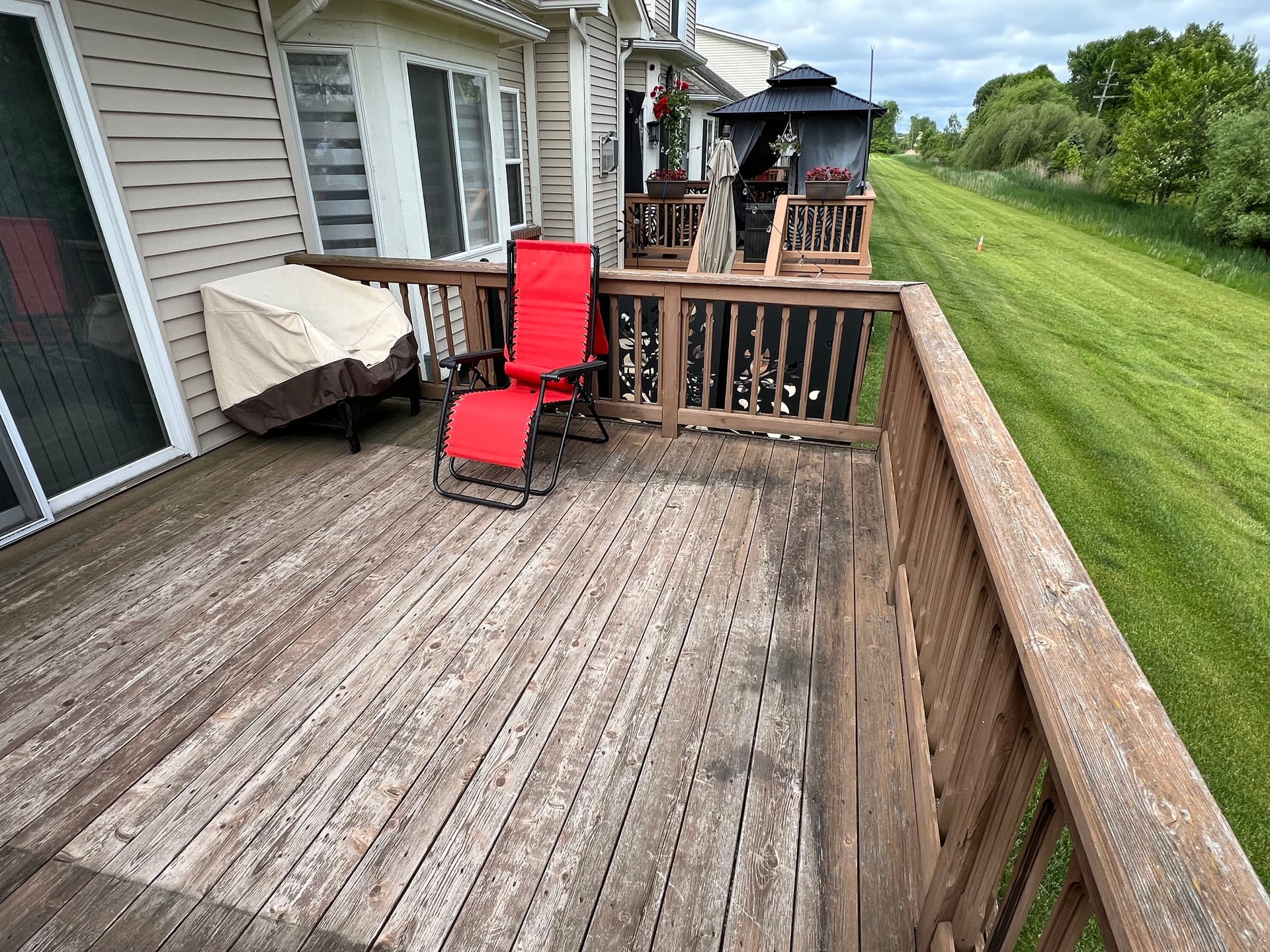
A deck that's been ignored for a few seasons starts to show it fast. The wood gets rough, the color fades out completely, and the surface starts to look more like a liability than a living space. That's exactly what we were working with here - sun-bleached, weathered boards with the kind of worn-out gray tone that tells you the old finish is long gone.
When bare wood gets to that point, it's not just a cosmetic problem. Without a proper protective coating, the wood absorbs moisture, swells, and starts to break down from the inside out. A solid stain resurface is one of the best things you can do for a deck in that condition. It fills in the grain, locks out water, and gives you a consistent, finished look that holds up season after season.
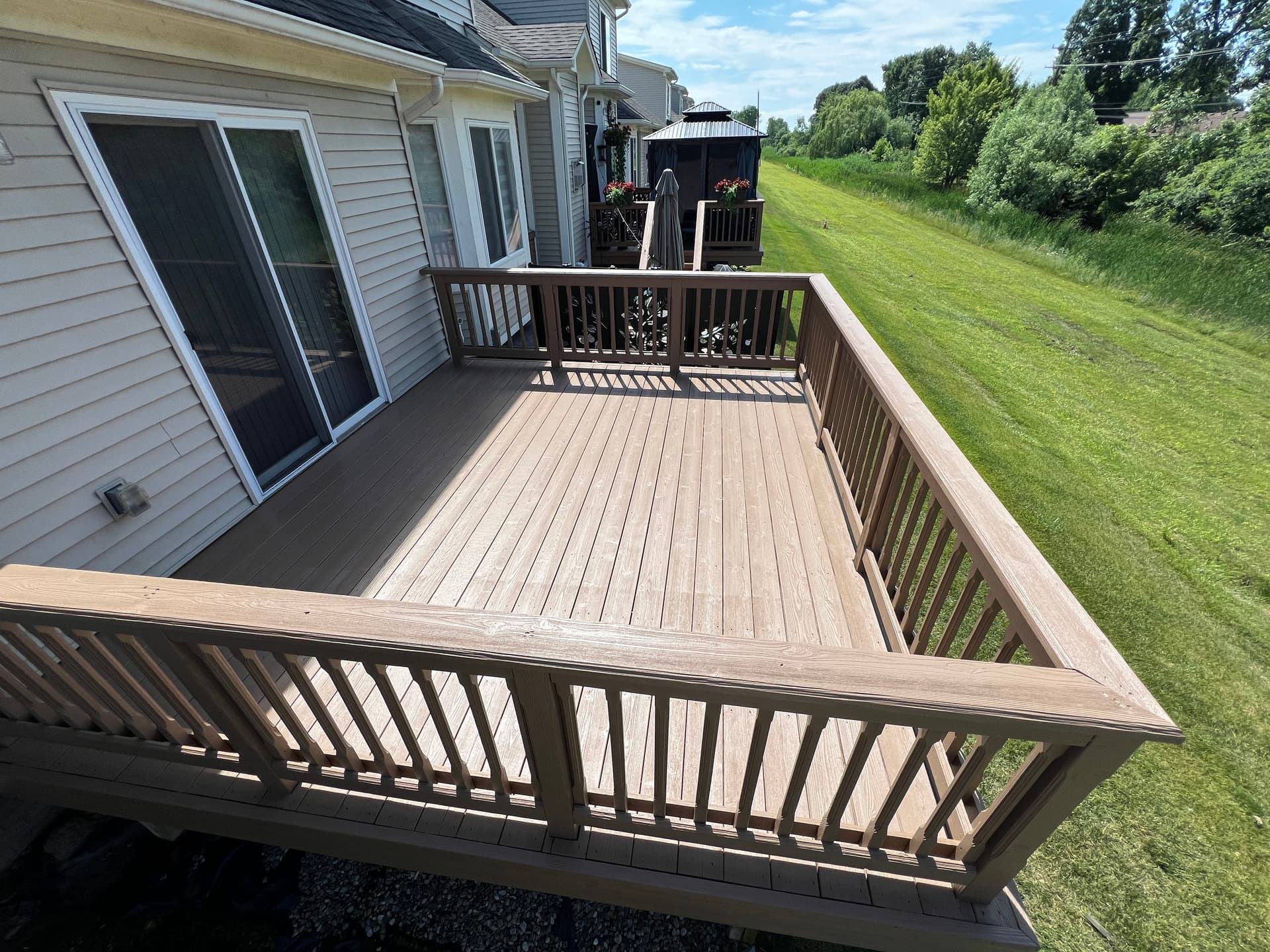
What we went with here was a solid stain - not a semi-transparent, not a paint. Solid stain is the sweet spot for a deck that's past the point of a clear or tinted finish. It provides real coverage over worn or discolored wood, while still allowing the surface to breathe. That matters a lot for exterior wood that expands and contracts with the weather.
The result speaks for itself. The deck went from a faded, rough surface to a clean, uniform warm tone across every board and railing. The whole space looks intentional again. That's what a properly done solid stain job does - it doesn't just cover the problem, it sets the wood up to stay protected for years.
If your deck is at that stage where you keep putting it off because it feels like too big of a job, it's usually not as far gone as it looks. Most weathered decks are great candidates for this exact process. The key is getting it done right - proper prep, the right product, and clean application all the way to the edges.