Large Wall Hole Repaired and Painted to a Clean Finish

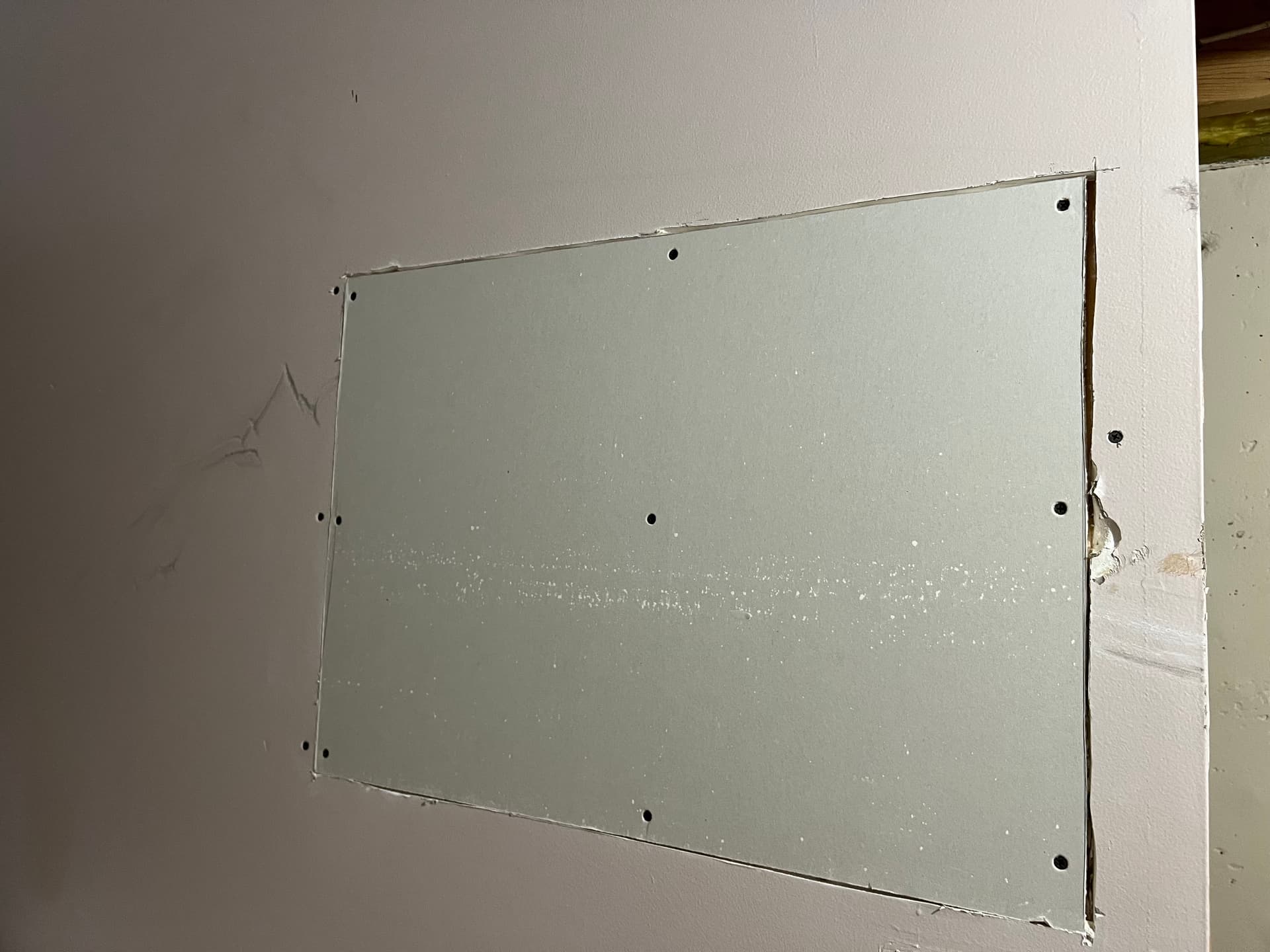
Here's what a proper drywall repair actually looks like from start to finish. We started with a large open hole - framing studs exposed, wiring visible, edges rough and uneven. Not the kind of damage you can slap a mesh patch over and call it a day.
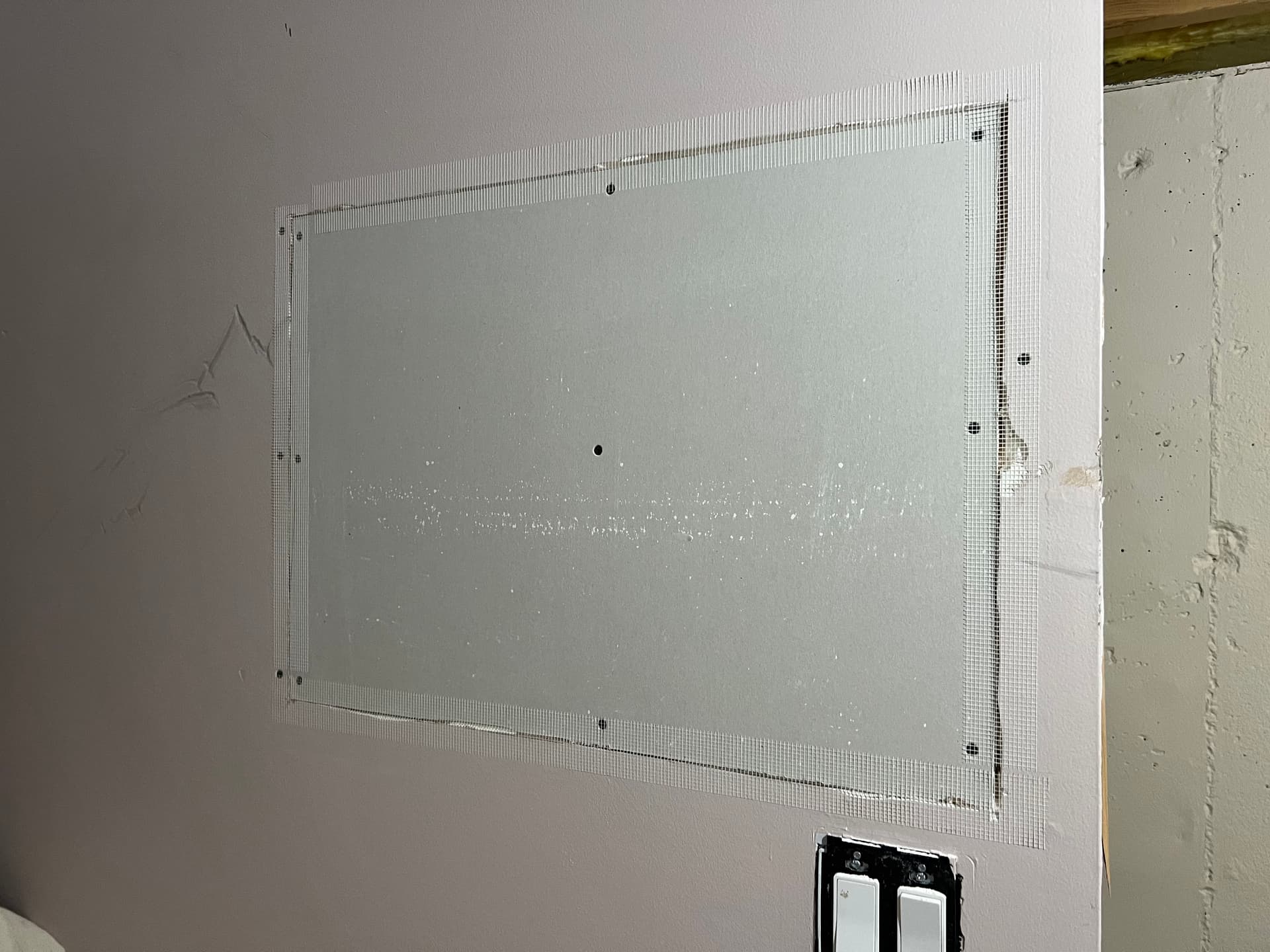
The first step was fitting and securing a new piece of drywall with solid backing. Every screw set, panel flush, edges tight. From there, we ran mesh tape around the full perimeter of the patch before any mud ever touched the wall. That tape is what keeps the repair from cracking down the road - it's a step a lot of people skip, and it's exactly why some patches fail within a year.
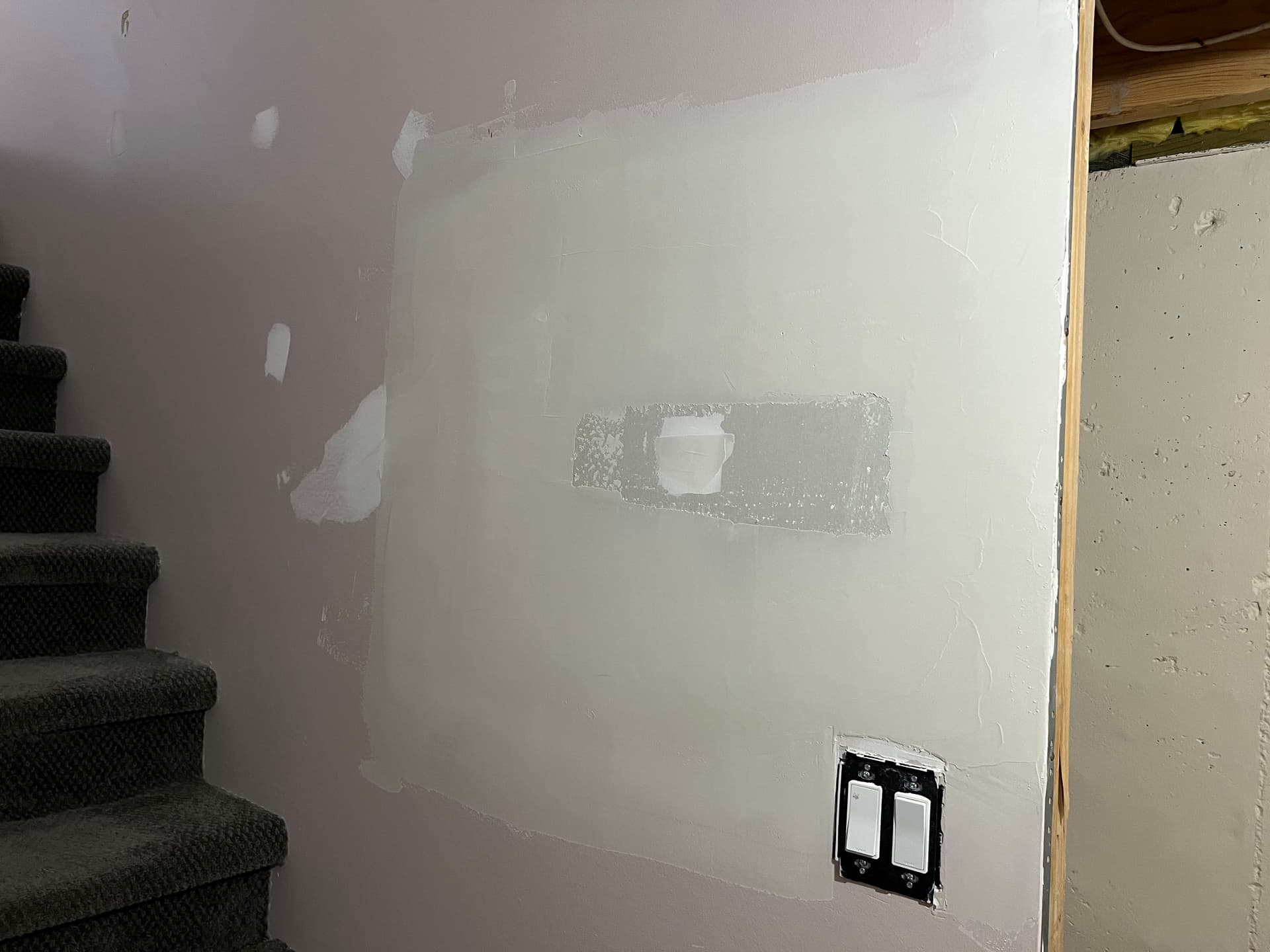
Then came the mudding and feathering. We built up the joint compound in layers, spreading it well beyond the patch edges so the repair blends into the surrounding wall. No hard lines, no ridges. Once it dried and was sanded smooth, the wall was ready for paint.
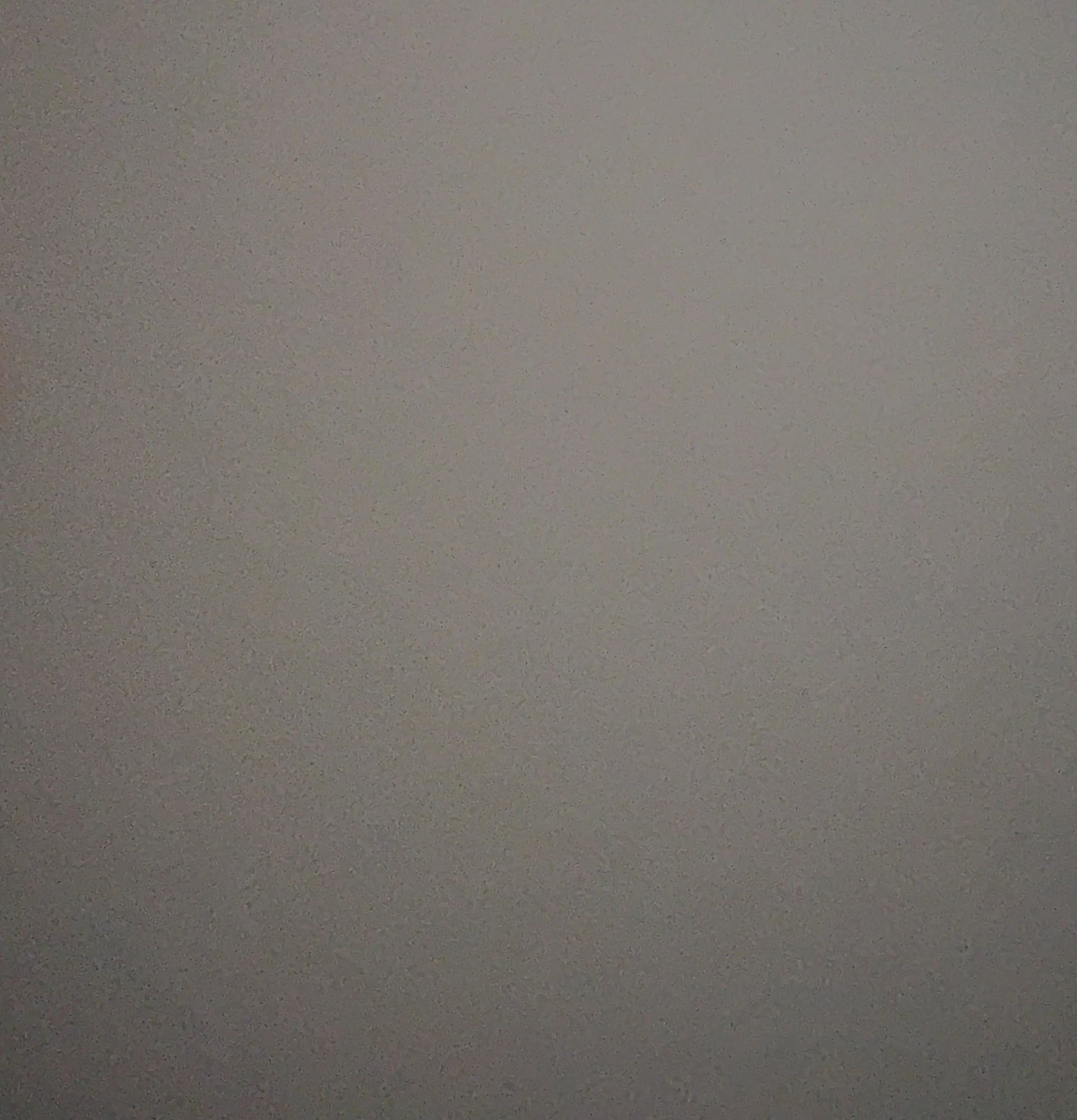
The finished wall shows exactly what this process is supposed to deliver - a uniform, painted surface with no visible sign of where the damage was. The texture matches, the paint lays flat, and the repair is solid. That's the goal every time.
A lot of people think drywall repair is just about covering a hole. It's not. It's about doing the prep work correctly so the paint looks right and the fix actually holds. That's what we focus on at Quality Painting LLC every single job.