Accent Colors Done Right on This Two-Story Exterior
Most exterior paint jobs stick to one color and call it a day. Nothing wrong with that - but when you add a second or third accent color with intention, the whole house reads differently. It stops looking flat and starts looking finished.
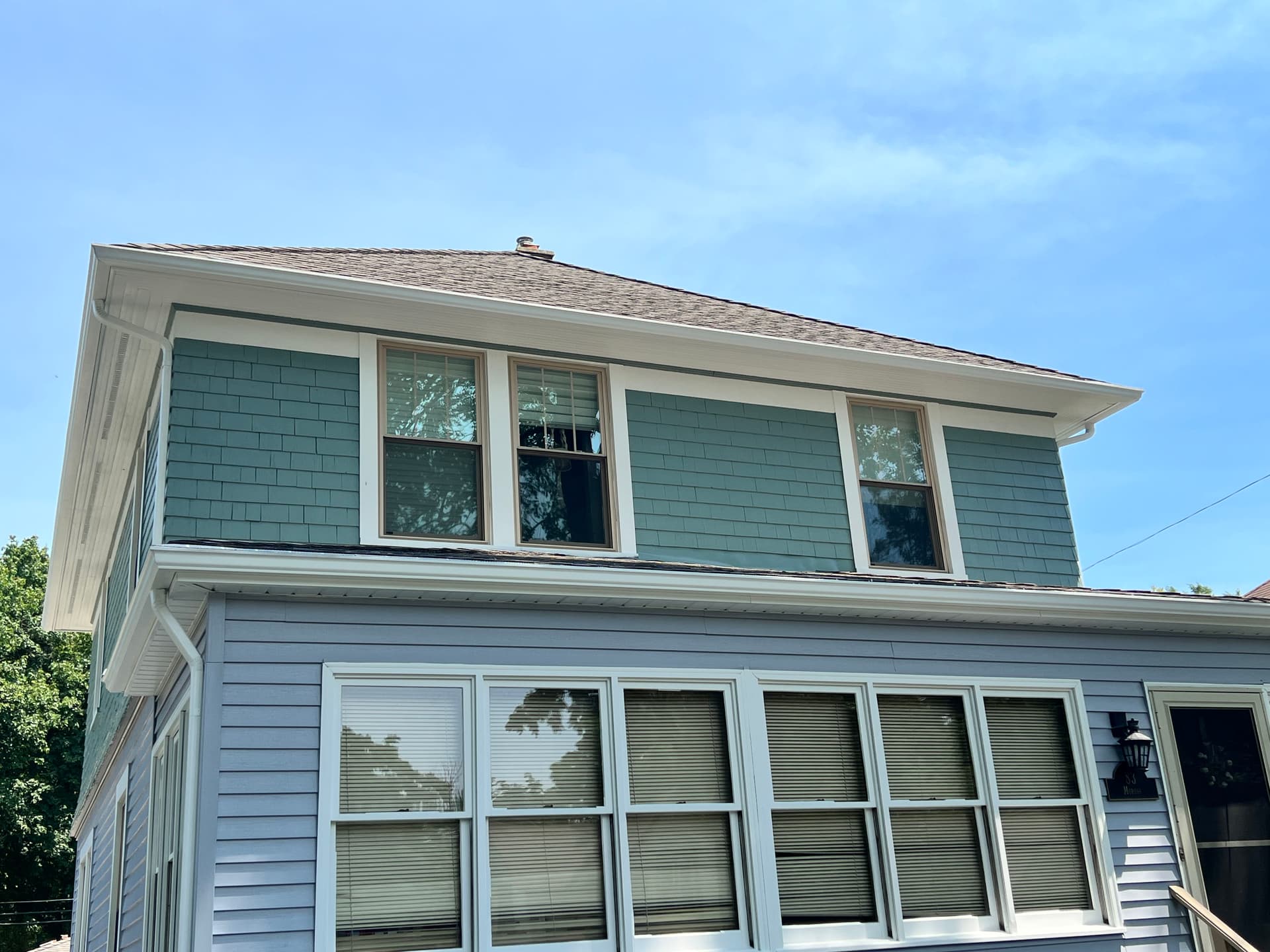
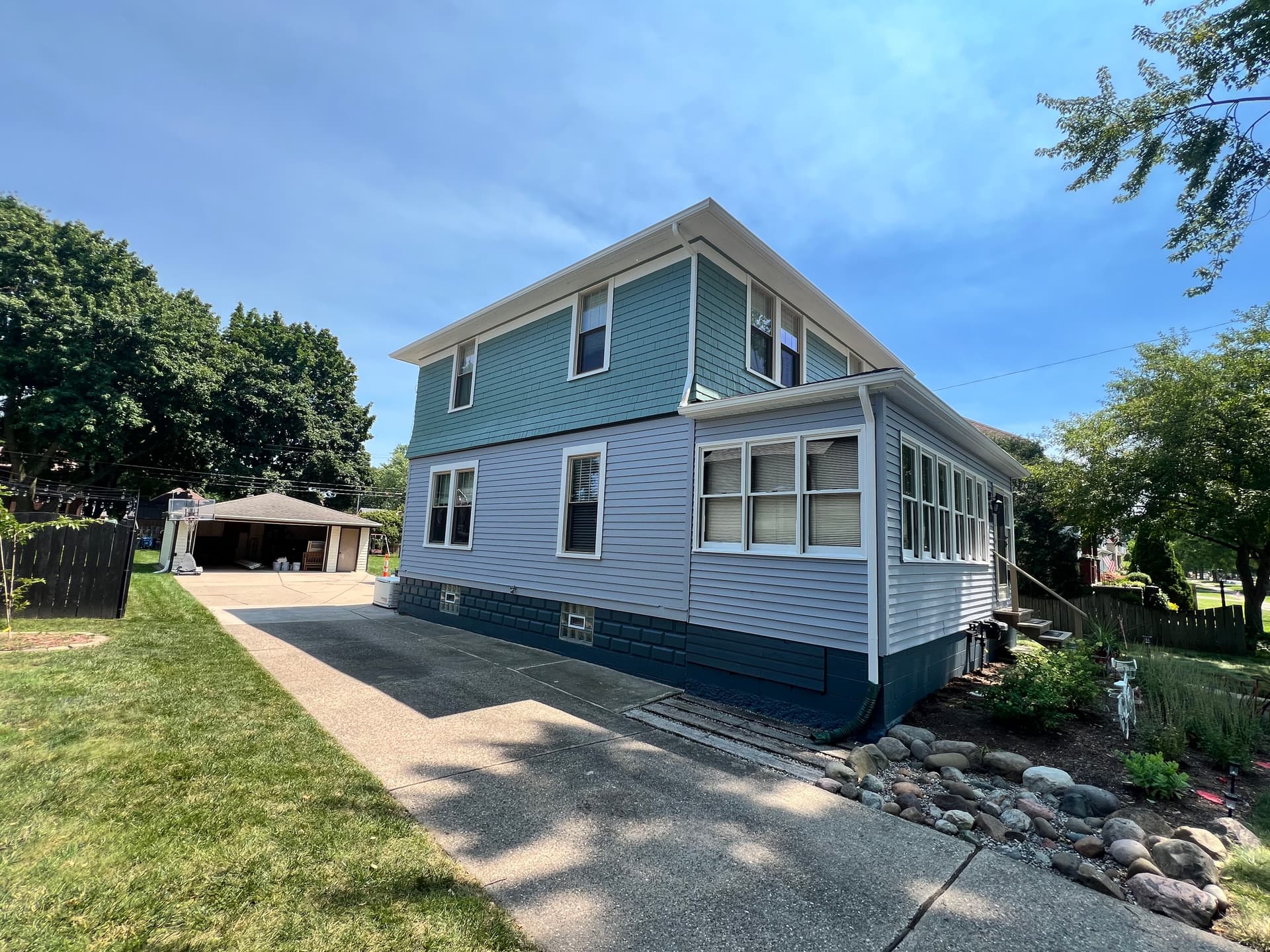
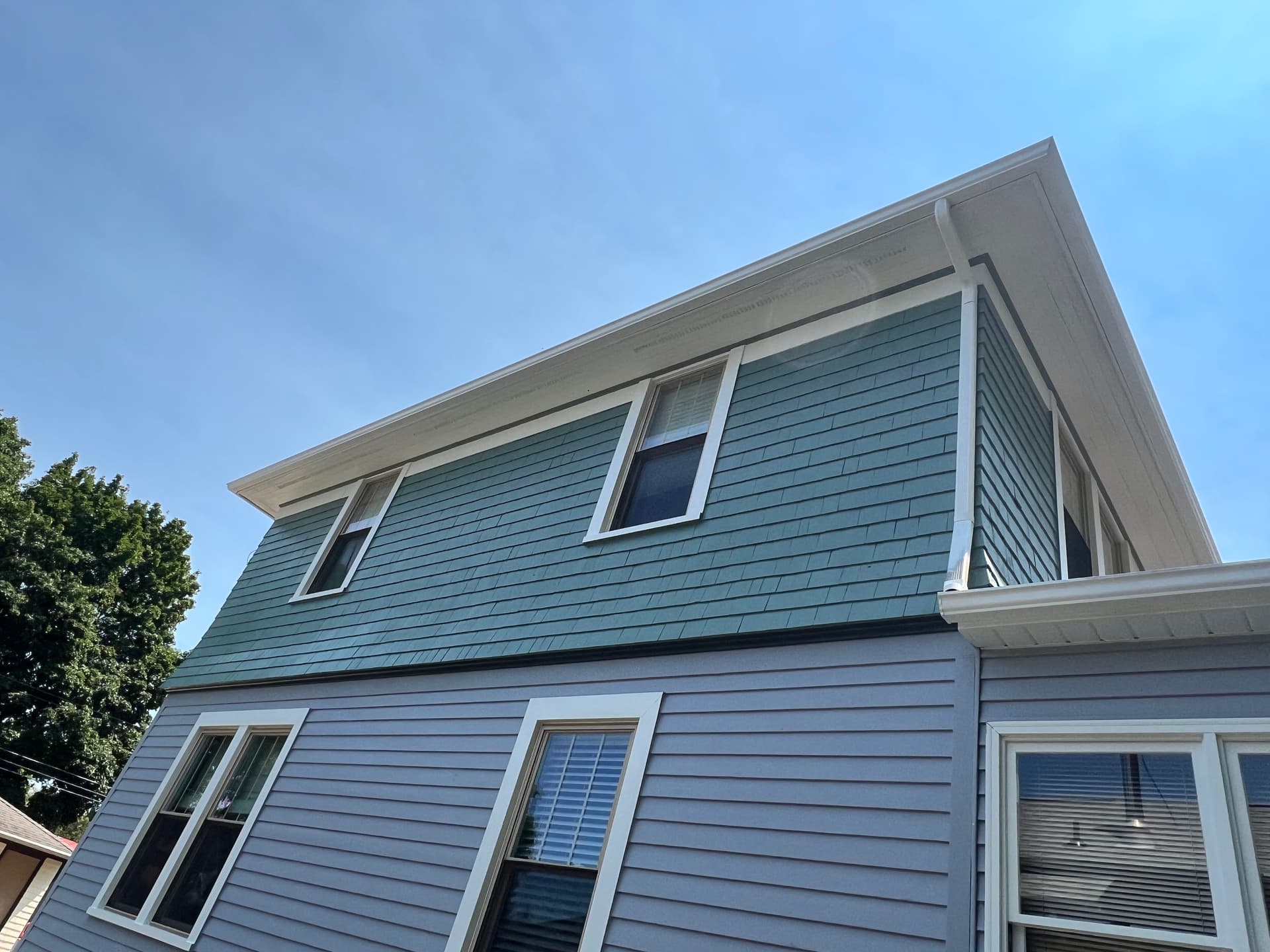
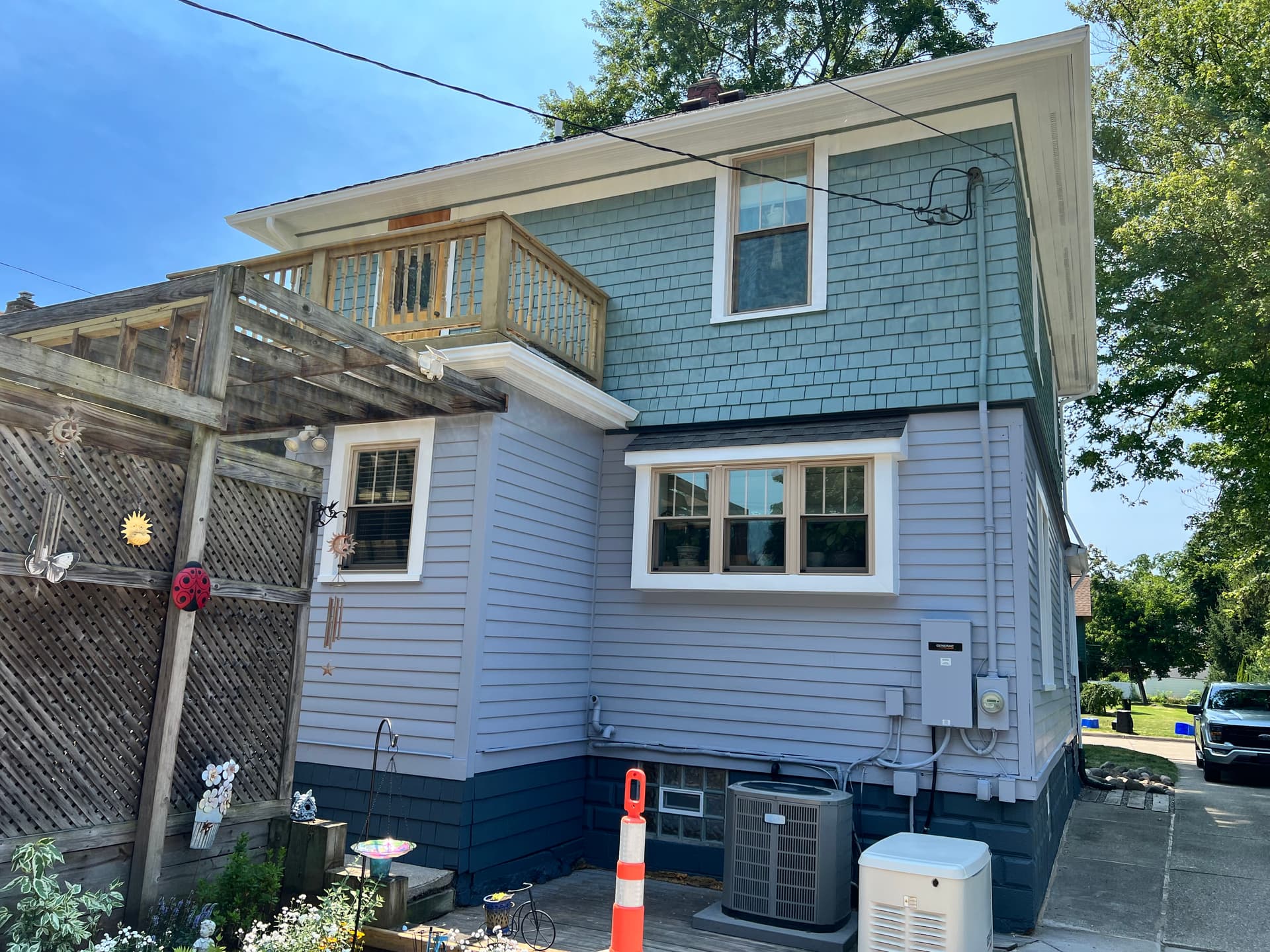
Here's what we were working with - a two-story home with a lot of surface variety. Shake shingles on the upper level, horizontal lap siding on the lower, a foundation band, trim, window surrounds, gutters. Each of those elements is an opportunity. Ignore them and the house looks like one big blob of color. Treat them right and suddenly the architecture has personality.
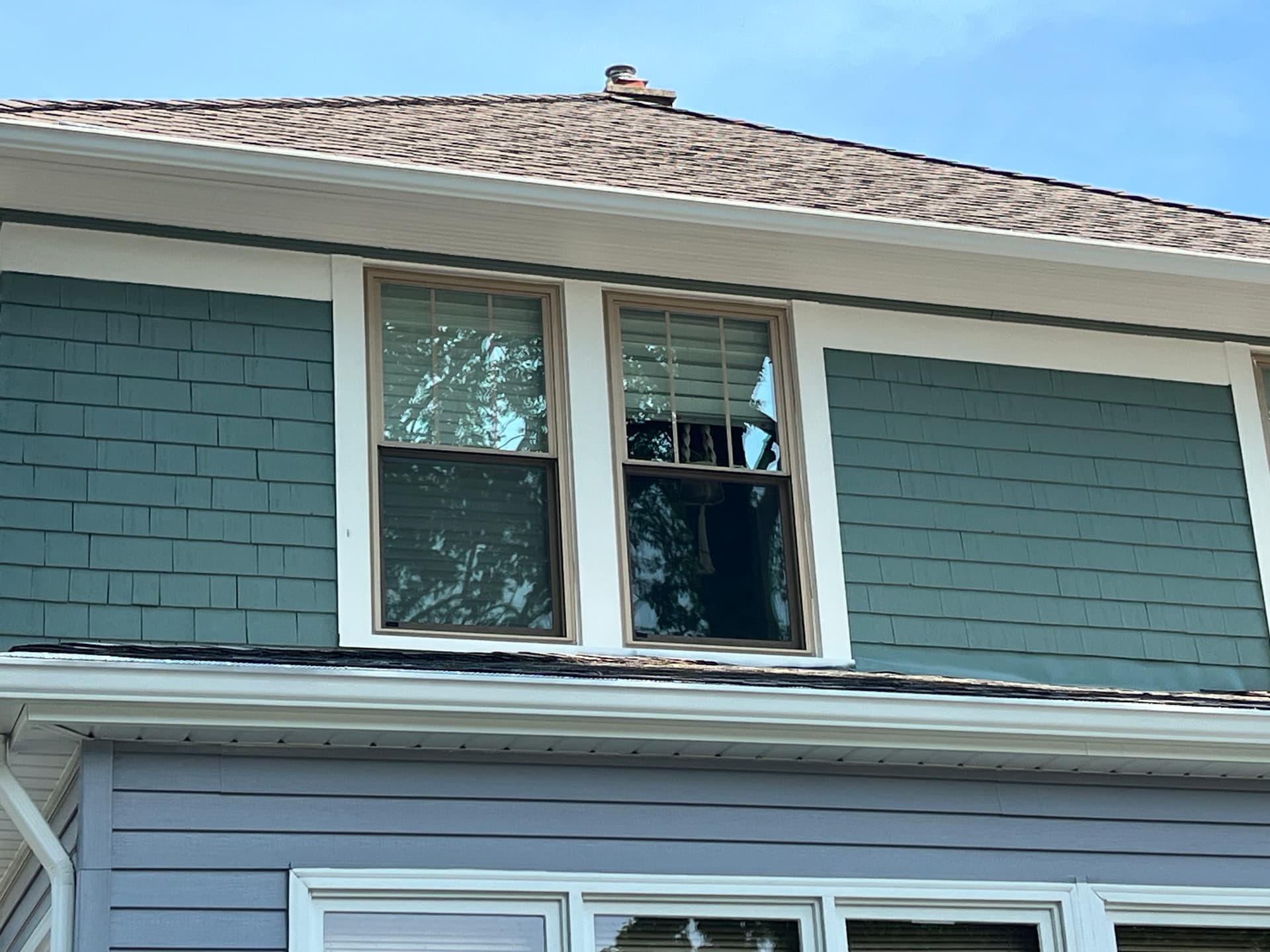
We went with a cool blue-green for the upper shingle siding, a softer gray-blue on the lower lap siding, and a deep navy on the foundation band at the base. The white trim ties everything together - window casings, fascia boards, gutters, all kept crisp and clean. That contrast between the white trim and the darker siding tones is what makes the windows pop and gives the exterior that sharp, intentional look.
The detail work is where most paint jobs either earn trust or lose it. Cutting in cleanly around windows and along rooflines, keeping the foundation color line straight, making sure the trim has even coverage all the way into corners - that's not glamorous work, but it's exactly what separates a quality job from one that looks rushed. We slow down on those parts because they're what people actually notice up close.
A color palette like this works because each tone has a job to do. The foundation color grounds the house visually. The two siding tones create a natural two-story separation without feeling disconnected. And the white trim acts as a frame that pulls every color together. That kind of thinking goes into every exterior painting job we take on.